
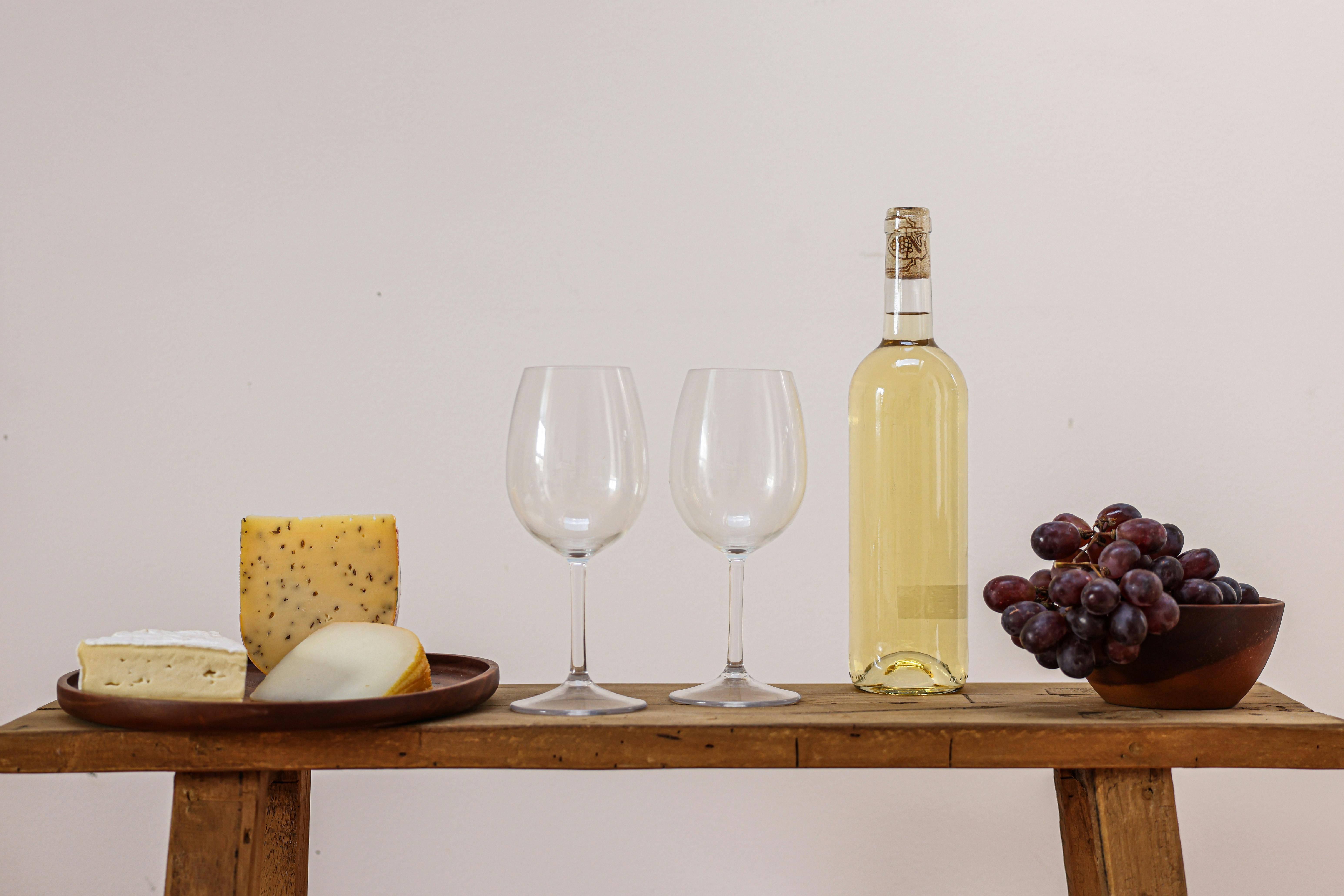
The oldest pairing rule is that rich food wants a tannic wine. The mechanism is physical rather than a matter of taste, and understanding it explains where the rule holds and where it collapses.
Tannin binds to protein, including yours
Tannins are polyphenols that bond readily with proteins. The proteins in saliva are what they find first when wine reaches the mouth.
That binding strips the lubricating layer from the surface of the tongue and cheek, which registers as dryness and grip rather than as a taste.
Astringency is therefore a tactile sensation, not a flavour. It is closer to texture than to bitterness, though the two usually arrive together.
Because it depends on saliva, the same wine feels more astringent to a dehydrated drinker and less so after a mouthful of something rich.
Fat provides an alternative target
Fat in food coats the mouth and provides both a physical barrier and a supply of protein for the tannin to bind to before it reaches saliva.
A mouthful of aged cheese or fatty meat leaves a film that the wine has to work through. The tannin spends itself on that film rather than on the palate.
The wine consequently tastes softer, fruitier and less severe, without any change in its actual composition.
The effect is immediate and short-lived. It works sip by sip, which is why the pairing has to be maintained across the meal rather than established once.
Why the same wine turns hard against lean food
Serve a young tannic red with a lean white fish and there is nothing for the tannin to attach to except the palate itself.
The wine reads as harsh and metallic. The fish, meanwhile, is overwhelmed, since delicate proteins carry very little flavour weight.
Fish oils complicate this further. Some react with iron content in red wine and produce a distinctly unpleasant metallic finish that neither element has alone.
This is the origin of the white-with-fish convention. It was never a rule about colour, only a durable shorthand for a real interaction.
Age changes what the wine brings to the table
Tannin polymerises over years in bottle. The molecules link into longer chains, become too large to stay suspended, and eventually fall out as sediment.
An old red therefore has less free tannin to bind with, which is why mature wines pair well with lighter dishes that would destroy them when young.
The trade is that the same wine has lost the structure that made it useful against a heavy dish. A twenty-year-old red against a fatty roast can simply disappear.
Sommeliers plan around this by matching young wines to the richest courses and holding mature bottles for something more restrained.
Not all fat behaves the same way
Dairy fat coats persistently and is the most effective at blunting tannin. Butter sauces and aged cheeses do the heaviest lifting.
Rendered animal fat behaves similarly but carries more savoury compounds, which push the wine's fruit forward as well as softening its grip.
Olive oil is thinner and clears faster, so its softening effect is milder and the pairing depends more on the acidity of the dish than on the fat itself.
Fried food adds a further variable. The crust holds oil and salt together, and the salt component is doing separate work on the bitterness in the wine.
Acidity is the other half of the equation
Fat needs cutting as well as matching. A wine with no acidity leaves a rich dish feeling heavy after two or three mouthfuls.
Acidity resets the palate by stimulating saliva, which restores the lubricating layer the fat has replaced and the tannin has stripped.
This is why the strongest pairings for fatty food combine acidity with structure rather than choosing one. The acid clears, the tannin binds, and the next mouthful arrives on a fresh palate.
A wine that is tannic without acidity tires quickly against rich food, which is a common failing in warm-climate reds picked very ripe.
Where the rule genuinely fails
Sweet fat breaks it. A rich dessert has fat and sugar together, and sugar makes tannin taste harsher, so a dry red is worse than no wine.
Very spicy dishes break it in the other direction. Capsaicin heat is amplified by alcohol and by tannin, so a big red makes a hot dish hotter.
Highly aromatic fats, such as those carrying strong herbs or smoke, can also dominate. The wine ends up as background alcohol rather than a partner.
In each case the fat is present but something else has taken control of the interaction, which is why the pairing rule is a starting point rather than a law.
How to read a dish before choosing a bottle
The useful question is not what the protein is but how the dish was cooked and what it was finished with.
A chicken breast poached and served with lemon and a chicken thigh braised in cream are different pairing problems despite sharing an animal.
Sauce usually outweighs protein, because sauce carries most of the fat, salt and acid, and those three determine what the wine has to contend with.
Read the sauce first, judge the fat level second, and the tannin question answers itself before the wine list is opened.