
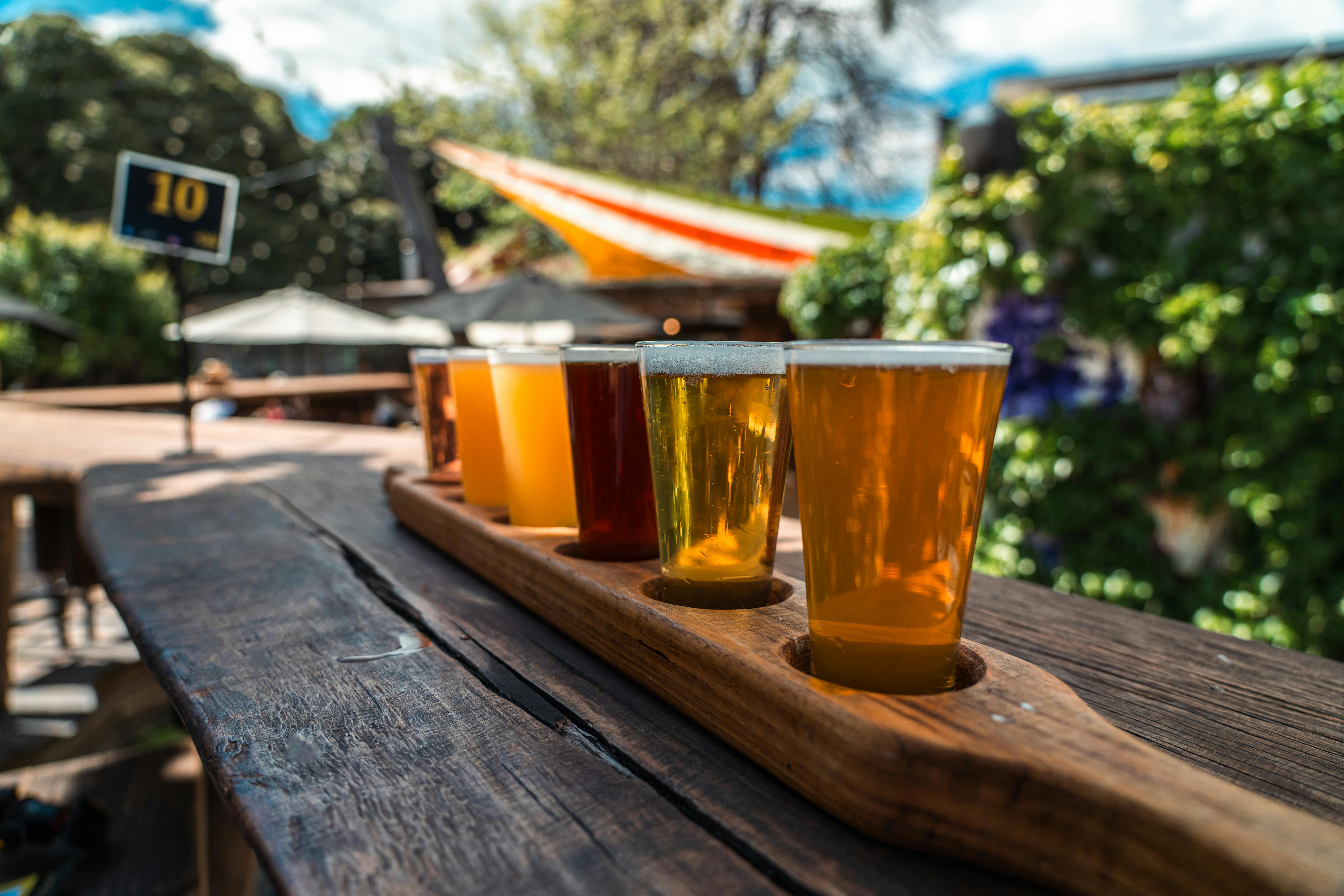
The colour of a beer comes almost entirely from how its malt was heated, not from anything added later. The same heating that creates colour also destroys the enzymes brewing depends on, and that tension shapes every dark beer recipe.
Malting stops germination at a chosen point
Barley is steeped until it begins to sprout, which activates enzymes that break down the grain's stored starch and cell walls.
The maltster halts the process with heat before the sprout consumes the starch, locking in both the enzymes and the raw material they will later act on.
Everything after that point is a matter of how hot the drying gets and how much moisture is present when it does.
Browning reactions need heat and moisture together
Sugars and amino acids in the damp grain react under heat to form brown pigments and a wide range of flavour compounds.
Drying gently at low temperature produces pale malt with bready, biscuit character and almost no colour.
Holding the grain damp while raising the temperature drives the reaction much further, yielding caramel and toffee notes and a deep amber colour.
Roasting is a separate process from kilning
Very dark malts are roasted in a rotating drum at temperatures well above kilning, closer to how coffee is treated.
This produces the coffee, chocolate and burnt notes in stouts and porters, along with colour intense enough that a small proportion darkens a whole batch.
Roasted grain can also be used unmalted, which gives a sharper, drier roast character than roasted malt does.
Enzymes are the cost of colour
The enzymes that convert starch to fermentable sugar are proteins, and heat denatures them permanently.
Dark malts therefore contribute colour and flavour but cannot convert their own starch, let alone anyone else's.
A recipe has to include enough pale malt to supply conversion for the whole mash, which is why even the darkest beers are built on a pale base.
Colour is measured, flavour is not
Malt is sold with a colour rating measured by light absorption, and brewers calculate a predicted beer colour from the weighted contribution of each malt.
Flavour has no equivalent scale, so two malts with the same colour rating can taste quite different depending on whether the colour came from caramelisation or from roasting.
This is why brewers specify malts by name and producer rather than by colour figure, and why substituting a similar-looking malt changes a recipe more than the numbers suggest.