
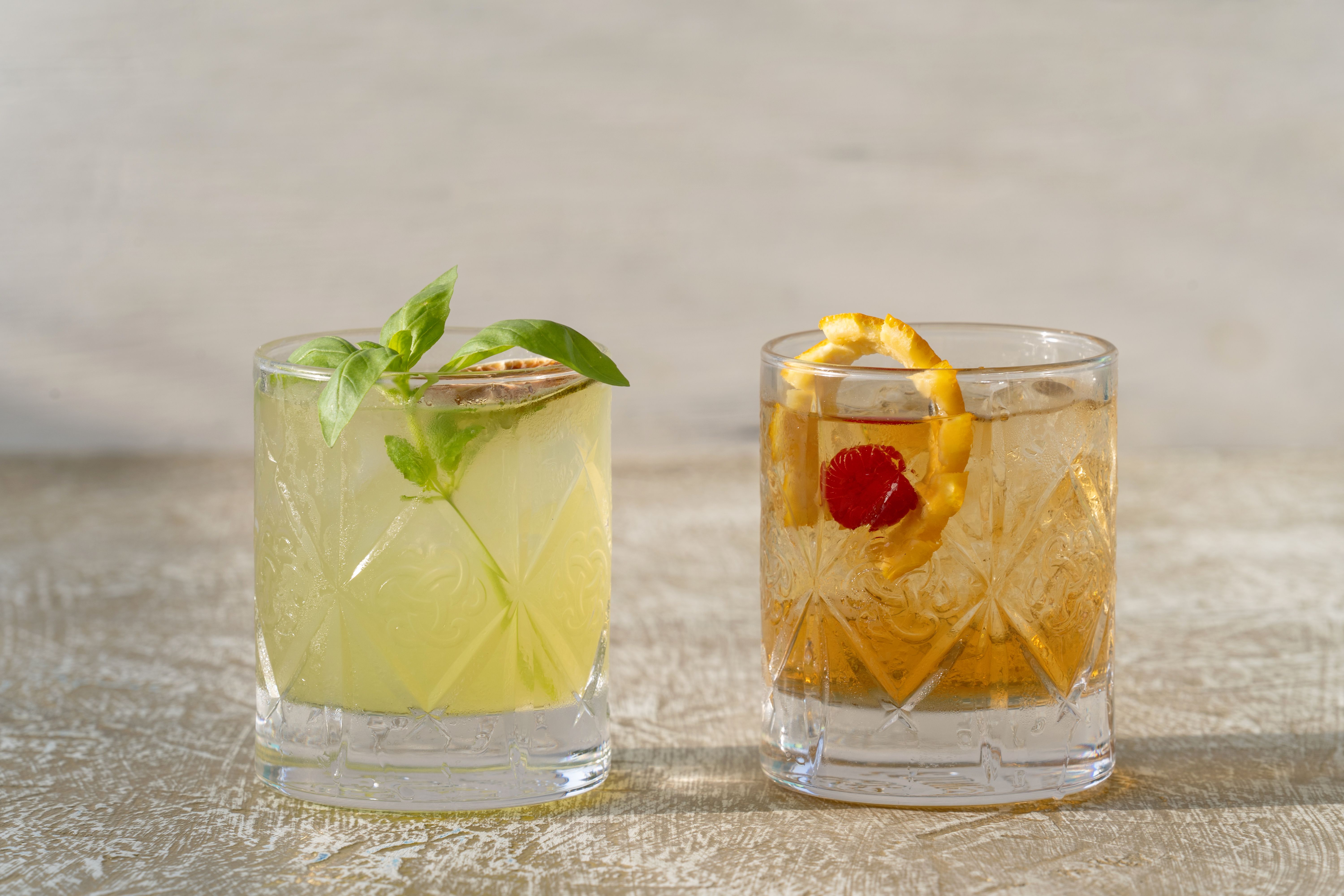
Drinks without alcohol need to solve problems that alcohol normally handles.
Body and weight
Alcohol contributing texture that must be replaced.
Which syrups, teas and proteins can provide.
Bitterness and complexity
Components providing structure.
Which is why tea and bitter botanicals appear frequently.
Length
Drinks that remain interesting to the last sip.
Pricing and perception
Customers resisting paying cocktail prices without alcohol.
Which is a genuine commercial difficulty.
Why so many are disappointing
They are frequently designed as sweet juice combinations rather than as drinks with structure, and served as an afterthought.
Which produces something cloying that nobody wants a second of.
Venues doing this well treat the alcohol-free list as a genuine design problem, using acidity, bitterness, tannin and length to build drinks that work on their own terms.
Ingredients that help
Tea, verjuice, vinegar-based shrubs and bitter botanicals.
Which supply structure alcohol would otherwise provide.
Sugar levels
Lower than instinct suggests.
Which is the most common error.
Presentation
Served in the same glassware with the same care.
Which matters socially.
Why it is worth doing properly
A growing proportion of customers ordering them.
What makes one worth ordering
Structure, restraint with sugar, a genuine reason to exist beyond being non-alcoholic, and the same care in presentation.
Which is a short list and eliminates most of what is offered.
Venues that put an experienced bartender on the alcohol-free list rather than treating it as a junior task produce noticeably better results.
Naming
Descriptions avoiding framing drinks as deficient versions.
Which affects how they are perceived.
Ingredients worth stocking
Teas, vinegars, bitters without alcohol and quality soft drinks.
Trace alcohol
Some bitters and extracts containing small amounts.
Which matters for people avoiding it entirely.
The social point
Being able to participate without explanation.
Why the production side is worth knowing
Drinks are among the most heavily marketed products there are, and a great deal of what is said about them is designed to justify a price rather than to explain a process. Heritage, craft, tradition and small batch are all words doing commercial work.
The processes underneath are genuinely interesting and largely documented. Fermentation, distillation, ageing and blending are technical disciplines with real constraints, and understanding them makes it considerably easier to tell the difference between a product that reflects a genuine method and one that reflects a design brief.
It also makes the money easier to place. Knowing that duty is a large share of a cheap bottle, that ageing costs a producer volume every year, and that appellation rules constrain method rather than guarantee quality explains most of what price actually reflects.
A note on drinking
Nothing here is intended to encourage drinking, and the health evidence on alcohol has moved in one direction over recent years. Guidance in several countries has been revised downwards, and no health body now describes alcohol as beneficial.
Anyone concerned about their own drinking, or someone else’s, can get free and confidential help from national health services and from support organisations in almost every country. That help is available regardless of how much someone drinks and does not require anyone to have reached a crisis first.
A general note
Production rules, labelling requirements, duty structures, licensing and health guidance all differ substantially between countries and change. National regulators, tax authorities and health services publish the applicable rules and are the authoritative source.
A closing thought on the subject
Drinks are one of the oldest manufactured products there are, and almost every technique in current use was arrived at empirically long before anyone could explain why it worked. The science came afterwards and mostly confirmed what producers had already established by trial and error over centuries.
That history is worth holding onto when a product is marketed as an innovation. Most of what is genuinely new in this industry is in measurement, consistency and scale rather than in method, and there is no shame in that: reliably making the same good thing every time is a harder achievement than it sounds.
Where to read further
Trade bodies, production institutes and regulators publish technical material on all of this, most of it written for producers rather than for consumers and consequently much clearer about what actually happens. Brewing and distilling institutes, oenology departments and national food standards agencies are the obvious starting points, and almost all of their introductory material is freely accessible.
A final note on the industry
Drinks production is one of the few sectors where genuine craft, industrial scale and heavy marketing sit side by side under the same category names, and telling them apart from a label alone is frequently impossible.
Knowing the processes is the most reliable way to read past that, because the constraints of fermentation, distillation and ageing are real and expensive and cannot be shortcut by branding. Everything else on a label is a claim; the process is a fact.