
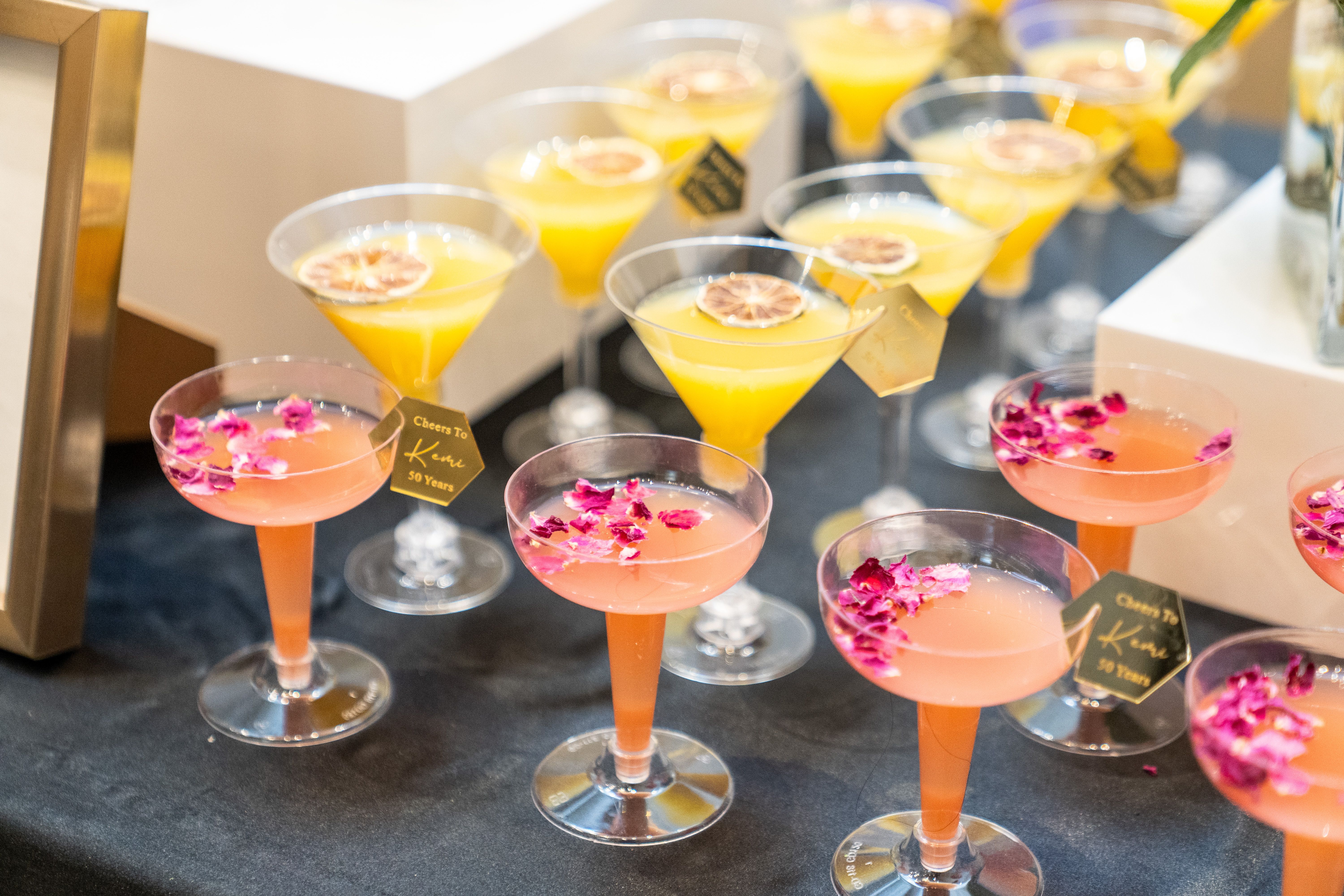
A twist of peel dropped into a drink looks decorative and is doing something measurable. Aroma reaches the nose before liquid reaches the tongue, and the garnish is usually the strongest aromatic element in the glass.
Smell arrives before taste
Most of what is perceived as flavour comes through the nose, both from the air above the glass and from the back of the throat while drinking.
A garnish sits at the rim, closest to the nose, and its volatile compounds dominate the first impression.
This is why the same drink garnished with lemon and with orange reads as two different drinks despite identical liquid.
Expressing peel is the active step
Citrus peel holds essential oils in small cavities near the surface, released when the peel is squeezed.
Expressing it over the drink sprays a fine mist of oil across the surface, where it sits and evaporates into the space above the liquid.
Dropping the peel in without expressing it contributes far less aroma and, over time, adds bitterness from the pith instead.
Different citrus carry different oils
Lemon oil is sharp and clean and lifts a drink immediately. Orange oil is sweeter, rounder and reads as warmer.
Grapefruit oil is more bitter and persistent, which suits drinks that are already sweet.
Lime oil is the most volatile and fades fastest, which is why lime garnishes tend to be wedges intended for squeezing rather than twists.
Most traditional garnishes started as ingredients
An olive contributes brine and savoury compounds. A cherry contributes sugar and its own syrup. A cucumber slice contributes a fresh vegetal note that fades quickly.
Mint is used as an aromatic cap, placed so the drinker's nose passes through it on every sip rather than to be eaten.
Where a garnish contributes nothing, it is genuinely decoration, and it is usually the one a bar can drop without anyone noticing the drink has changed.
Placement changes the effect
A garnish resting on the surface releases aroma continuously into the glass, while one submerged contributes flavour by slow infusion instead.
Sitting on the rim keeps it out of the drink entirely, which makes it a visual cue and an optional addition for the drinker.
Bartenders who care about this specify the placement in the recipe, since the same peel in three positions produces three different drinks.