
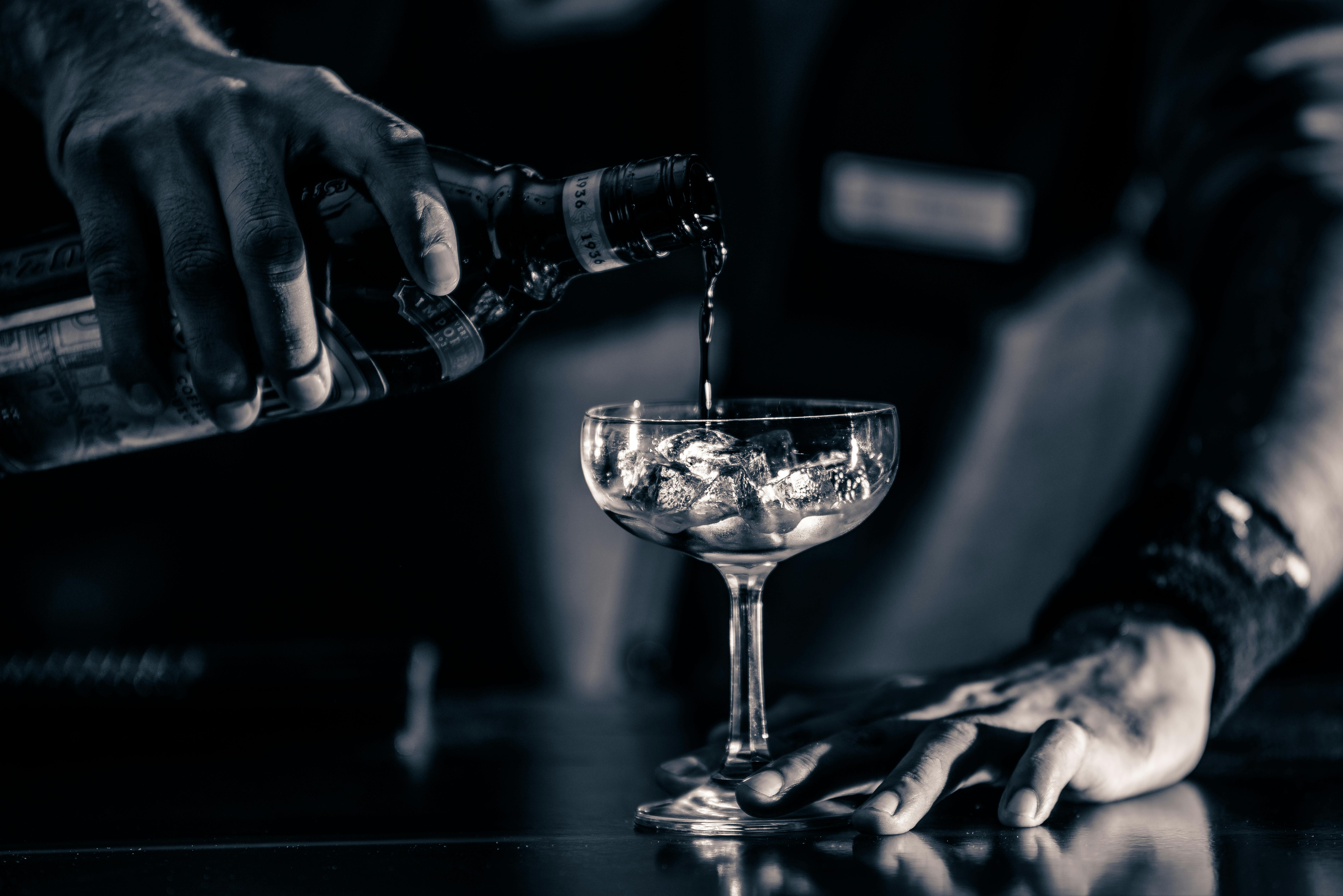
The argument between measured and free pouring looks like a debate about speed. It is really about how far a pour drifts across several hours, and what that drift does to a recipe.
How drift builds across a shift
A practiced free pour is accurate under calm conditions. Accuracy falls once the bar is loud, the bottles are half empty and the bartender is building several drinks at once.
Fill level alone changes the flow rate through a speed pourer, so an identical count delivers different volumes at the start and the end of a bottle.
The errors do not cancel out. Most pourers err in one direction, and a small consistent bias compounds across hundreds of drinks in a night.
Why a small error matters more in a cocktail
A cocktail is a ratio. Changing one component while the others hold shifts the balance point rather than simply making the drink stronger.
An overpour of base spirit in a sour flattens the citrus and pushes the sugar out of alignment, so the drink reads as harsh rather than as generous.
Modifiers are more sensitive still. A heavy hand with a bitter liqueur or a vermouth changes the character of a drink far more than the same error in the base would.
What the cost side looks like
Bar pricing is built on a target number of drinks per bottle. Consistent overpouring reduces that yield, and the shortfall appears as unexplained shrinkage at inventory.
The loss is invisible drink by drink, which is exactly why it survives. No single pour looks wrong, and the gap only appears in the count at the end of the month.
Measured pouring makes yield predictable, which in turn makes menu pricing something an operator can calculate rather than estimate.
Why speed is less of a tradeoff than it appears
A jigger costs a moment per pour, and in a rush that moment feels expensive. Experienced bartenders recover most of it by pouring and building in one continuous motion.
Remade drinks cost far more time than measuring ever does. A guest sending back an unbalanced cocktail consumes the bartender's attention twice over.
High-volume rooms often split the difference, free pouring simple builds like a spirit and soda while measuring anything with three or more components.
Why training still relies on the count
Free pouring is not discarded in training. Bartenders learn the count because it builds a physical sense of volume that makes errors easier to notice.
That instinct is useful when a jigger is unavailable, or during prep when proportions are set by eye and then checked by tasting the batch.
The measure is the standard and the count is the backup. Reversing those two roles is where most consistency problems on a menu begin.