
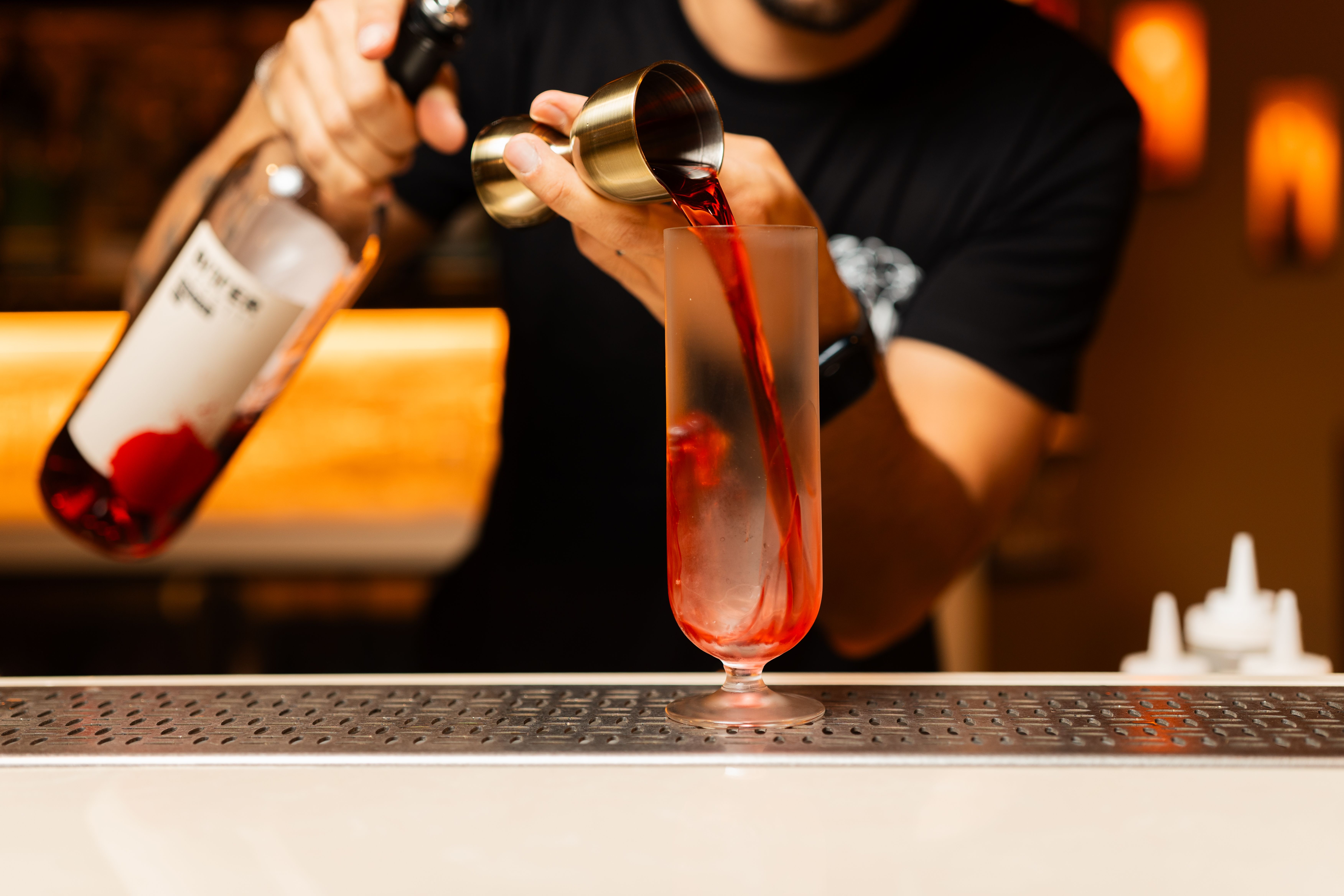
The rule that spirit-only drinks are stirred and drinks with juice are shaken is not arbitrary etiquette. The two actions produce measurably different liquids from the same ingredients.
Shaking adds air as well as cold
Violent agitation forces air into the liquid, creating a fine foam that changes the texture and lightens the body of the drink.
That aeration suits ingredients with proteins or sugars that can hold bubbles, which is why citrus and egg-white drinks are shaken.
A pure spirit mixture has nothing to stabilise the foam, so shaking it produces a cloudy drink that goes flat in the glass within a minute.
Chilling and dilution arrive together
Cold enters the drink because ice melts, and every degree of chilling is paid for with a corresponding amount of water.
Shaking exposes far more ice surface to moving liquid, so it reaches serving temperature in seconds rather than in half a minute.
It also delivers more dilution over the same period, which is why a shaken recipe is generally built with a higher proportion of spirit than a stirred one.
Ice fragments end up in the glass
Shaking chips small shards from the ice surface, and these pass through a standard strainer.
They continue melting after serving, so a shaken drink keeps diluting in the glass, which is acceptable in a short refreshing drink and unwelcome in a slow-sipped one.
Double straining through a fine mesh removes them, which is the standard fix where clarity matters.
Clarity is the visible difference
A stirred drink is transparent because it contains almost no suspended air or ice.
Spirit-forward drinks served in a stemmed glass are judged partly on that clarity, and it is lost permanently the moment the drink is shaken.
Suspended air scatters light, which is why a shaken drink looks pale and opaque for its first minute before the foam settles into a thin collar.
The foam also carries aromatics upward and releases them as it collapses, so the aromatic impression of a shaken drink is strongest immediately and fades faster than a stirred one.
Where the convention breaks down
Some drinks containing juice are stirred deliberately to produce a heavier, more spirit-led result, and some spirit-only drinks are shaken for a lighter one.
The decision follows from what texture the drink should have, and the traditional rule is simply the common case stated as a shortcut.
A bartender who understands the mechanism can break it in either direction and predict what will arrive in the glass.