
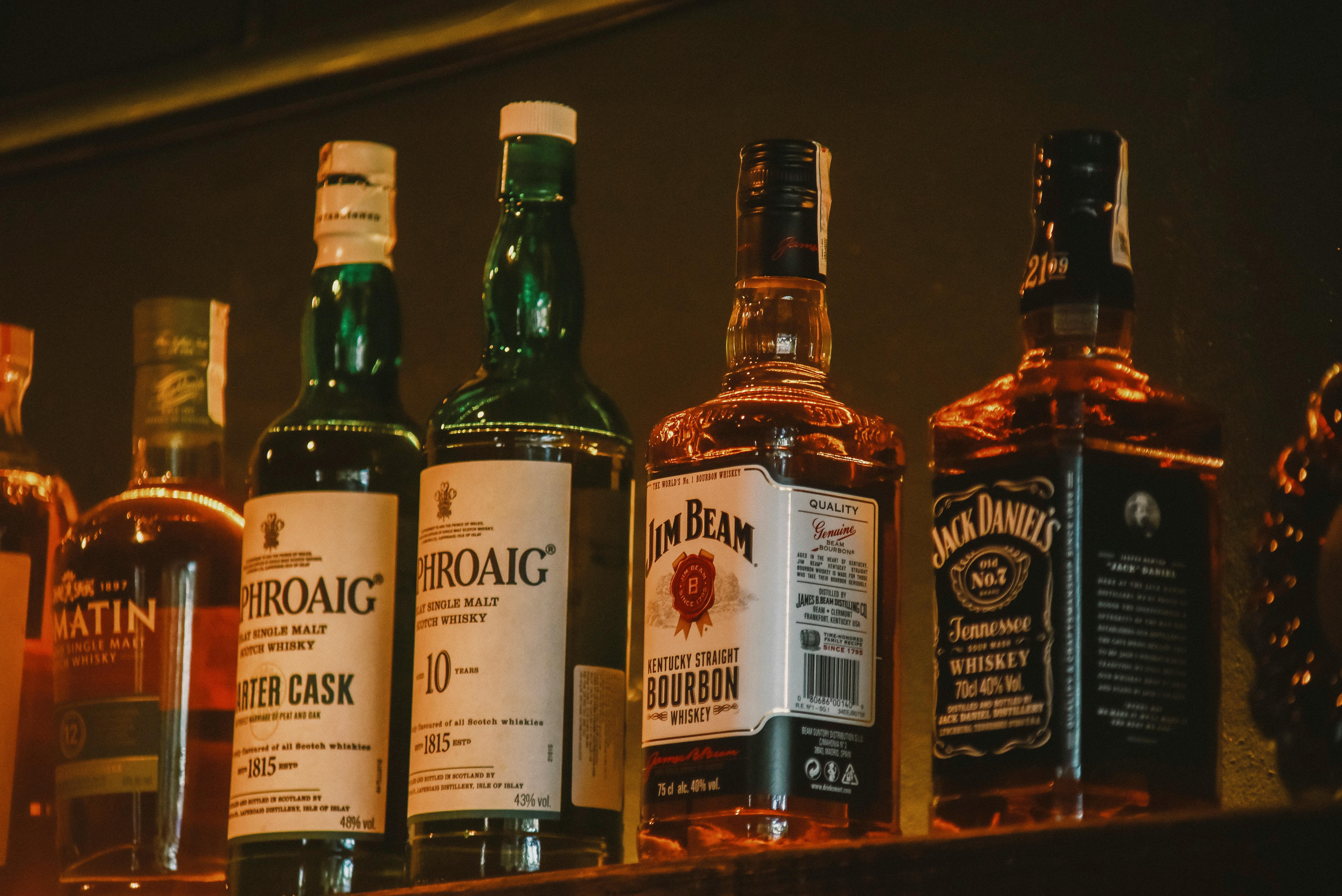
Bottles that once carried a stated number of years increasingly carry a name instead. The change follows from a rule about how age statements work and from the long lag between production decisions and sales.
An age statement describes the youngest component
Almost all aged spirits are blends of casks of different ages, and the stated age must reflect the youngest spirit in the bottle.
A blend containing mostly older casks and a small proportion of younger ones can only be labelled with the younger figure.
This makes the number a floor rather than an average, and it makes any use of young stock expensive in labelling terms.
Supply is fixed years before demand is known
The quantity of spirit available at a given age was determined by a distilling decision made that many years earlier.
If demand grows faster than those earlier decisions anticipated, the mature stock cannot be increased at any price.
Distilleries can expand production immediately, but the effect on aged stock does not arrive until the new spirit reaches maturity.
Removing the statement releases the constraint
A bottling with no stated age can be assembled from whatever casks produce the intended character, including younger ones.
This lets a producer maintain a house style and a supply of bottles without either raising prices sharply or diluting an existing age-stated line.
It also allows genuinely old casks to be used in a blend without the label being dragged down to the youngest component's number.
Evaporation makes old stock costly
A cask loses volume every year to evaporation, and the loss compounds over the life of the maturation.
A spirit held for two decades therefore yields substantially fewer bottles than the same cask would have yielded early on.
Warehouse space, insurance and capital tied up for those years all add to the cost, which is why price rises steeply with age rather than proportionally.
Age is a weak proxy for quality anyway
Maturation depends on cask type, previous fill, warehouse conditions and climate as much as on elapsed years.
Spirit aged in a hot climate interacts with wood far faster, so a few years there can produce more extraction than a decade in a cool one.
An age statement is precise about one variable and silent about the others, which is why the absence of one says less about a bottle than most buyers assume.