
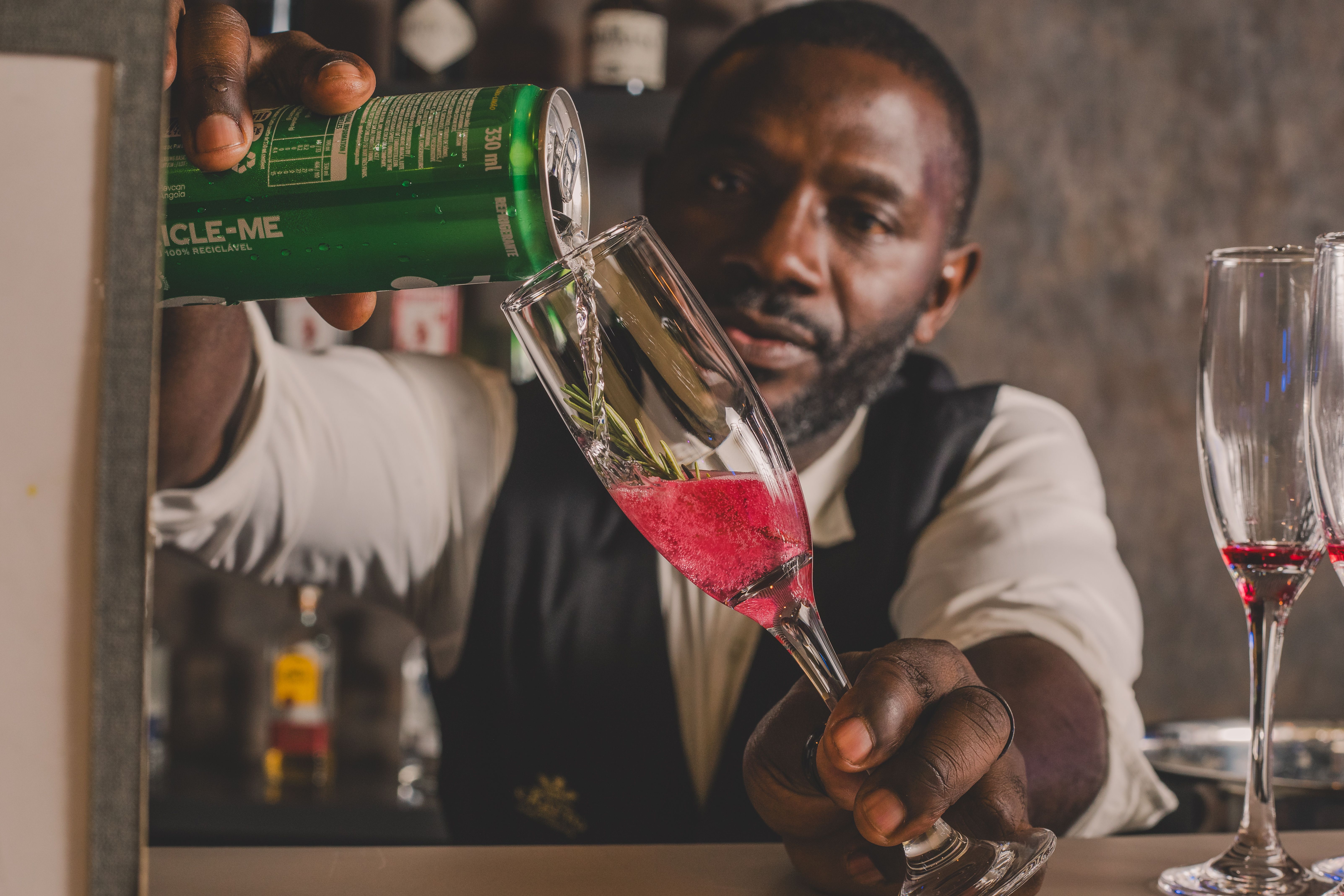
Service speed in a busy bar is determined mostly by the physical arrangement behind it. A bartender who has to walk for an ingredient loses more time than any amount of technique can recover.
The station is designed around not moving
A well-built station places ice, the most-used spirits, mixers, tools and a rinse sink within arm's reach of one standing position.
The layout is planned so that a common drink can be made without the bartender stepping away from that position at all.
Every step taken during service is repeated hundreds of times across a shift, which is why a few paces in the wrong place caps a bar's output.
The speed rail sets what can be served quickly
The rail directly in front of the ice well holds the bottles used most often, positioned so they can be reached without looking.
Its capacity is limited, so deciding what occupies it is a decision about which drinks the bar can serve fast.
A menu requiring bottles from the back bar for its most popular drinks will run slowly no matter how it is staffed.
Glassware placement is a hidden constraint
Glasses are bulky, fragile and needed for every drink, and they cannot all be stored within reach.
Bars with many glass types spend real time selecting and fetching, which is one of the arguments for a shorter glassware list.
Overhead racks solve the reach problem and introduce a temperature problem, since glasses stored above a working station are warm.
Service wells separate two different jobs
Drinks for table service and drinks for customers at the bar are made under different pressures and at different rhythms.
A dedicated service well lets a bartender work through a ticket queue without competing with people standing at the counter.
Bars without one force the same person to alternate between the two, and the ticket queue always loses because the customer in front is visible.
Menu design and layout are the same decision
A drink requiring four ingredients from three locations will always be slower than one requiring two from the rail.
Bars that plan properly design the menu and the station together, batching or pre-preparing anything that cannot be made in place.
Where the two are designed separately, the result is a menu that reads well and cannot be executed at volume, which is a common failure in new openings.