
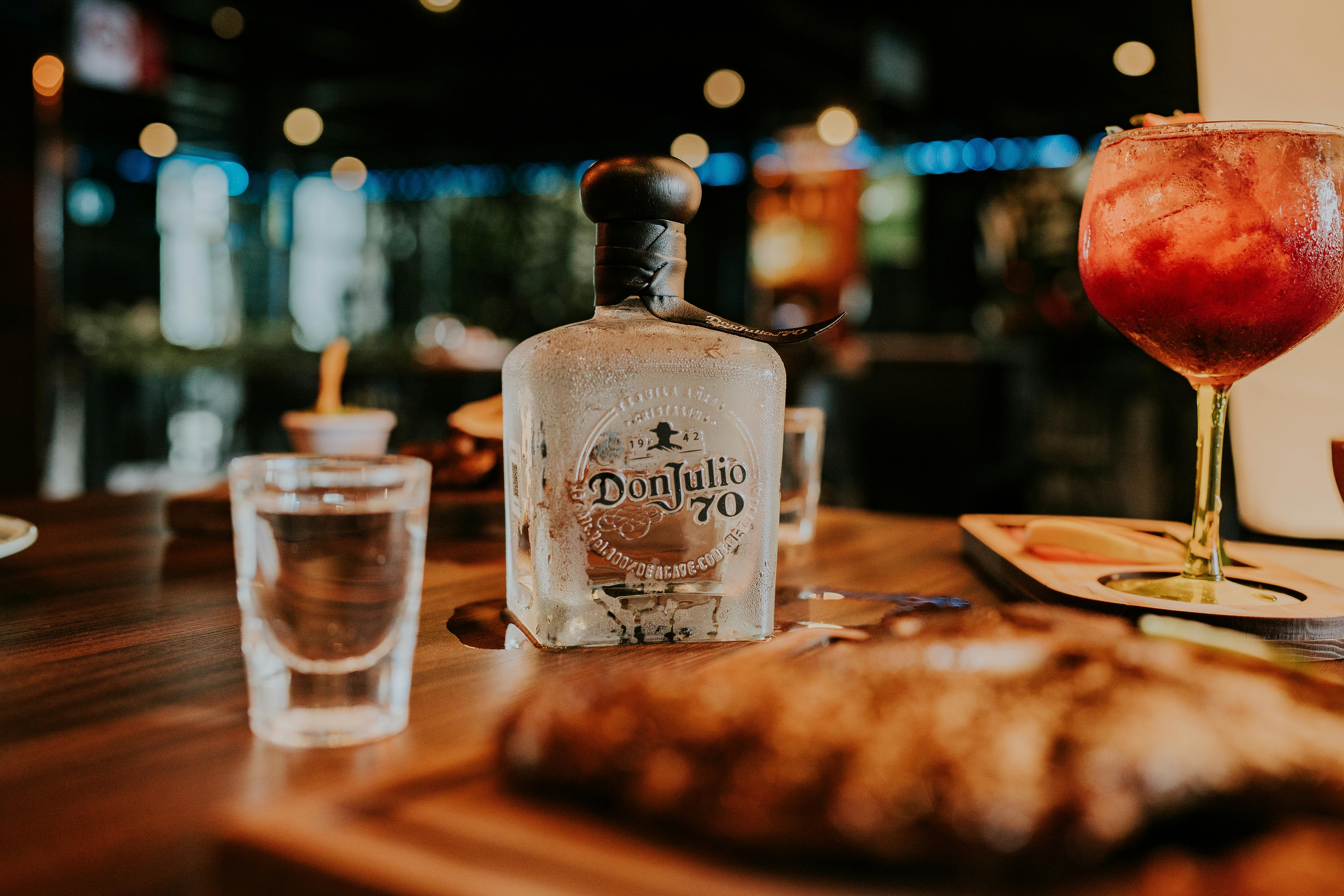
A cask strength bottle contains the spirit at whatever strength it left the cask, without the water added to bring most bottlings to a standard figure. That single omission changes both what is in the bottle and how it has to be served.
Standard bottling strength is a commercial decision
Most spirits are reduced with water to a consistent figure so that every batch tastes the same and the volume sold increases.
The reduction is done gradually, often over weeks, because adding water quickly can produce a haze and a temporarily disjointed spirit.
Cask strength skips this entirely, which means the strength varies between batches and even between individual casks.
Alcohol concentration governs aroma release
Aroma compounds partition between the liquid and the air above it, and a high alcohol concentration holds many of them in solution.
Adding water shifts that balance and pushes compounds into the headspace, which is why a few drops noticeably open up a strong spirit.
At full strength the ethanol vapour also saturates the nose, masking the subtler aromas underneath it.
The dilution decision moves to the drinker
Reducing at the table lets each person find the point where the spirit opens without losing its weight, and that point differs between palates.
It also differs between spirits, since some show best barely reduced while others need considerably more water.
The process is one-directional, which is the practical argument for buying at full strength: water can be added and cannot be removed.
Chill filtration is a separate variable
Fatty acid esters that dissolve at higher strengths come out of solution when a spirit is cooled or diluted, producing a haze that is cosmetic rather than a fault.
Chilling and filtering removes them before bottling, and removes some texture and flavour along with them.
Cask strength bottlings are frequently unfiltered because a spirit at high strength will not haze in the bottle, which is why the two descriptions so often appear together.
Batch variation becomes a feature
Standard bottlings are blended to a target, so any given expression tastes the same year after year.
Cask strength releases are usually numbered or dated precisely because they differ, and buyers track batches accordingly.
The trade is predictability: a bottle that was excellent last year offers no guarantee about this year's release, which is the cost of removing the step that made everything consistent.